Orchestration vs. Operation: The New Rules of the AI Workforce
If you listen to the headlines, you would think artificial intelligence is sweeping through the corporate world, entirely replacing human workforces overnight.
At RCM Digital Media, our philosophy is simple: Truth is the Weapon. And the truth about AI in today’s workforce is far more nuanced—and far more profitable—than the fear-mongering suggests.
AI isn't coming for your job. But a competitor who knows how to orchestrate AI is absolutely coming for your market share.
We are currently witnessing a massive divide in how companies integrate AI into their daily operations. It breaks down into two distinct camps: the Operators and the Orchestrators. Understanding the difference is what will determine whether your business scales autonomously or drowns in its own tech stack.
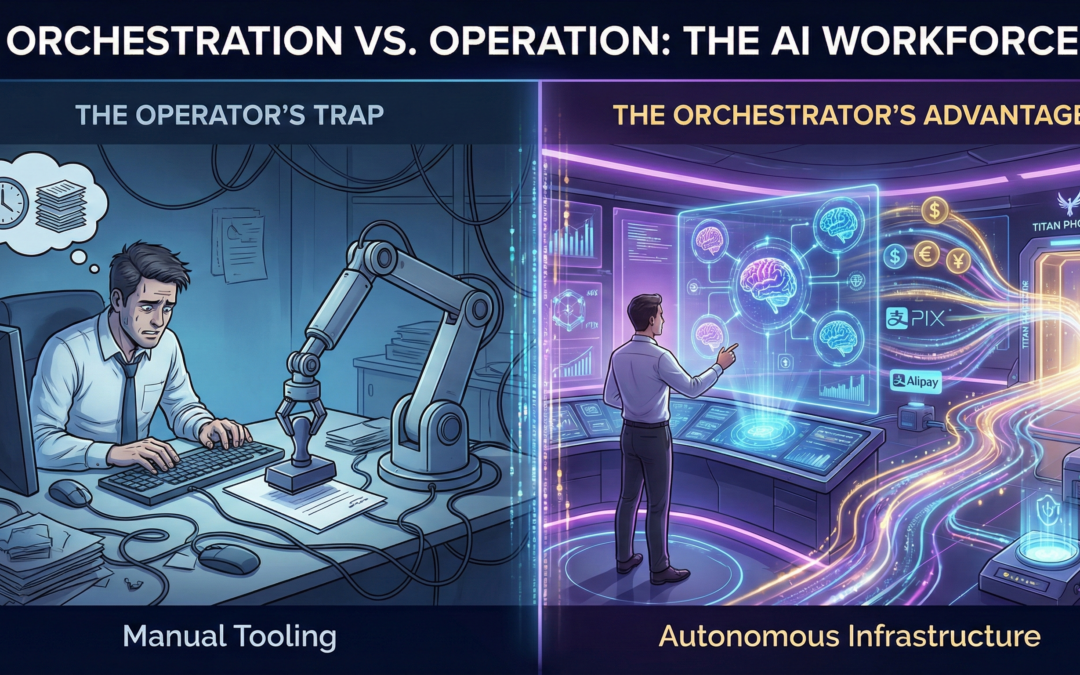
The Operator's Trap: Just Another Tool
Most mid-market companies are falling into the Operator's Trap. They read about the power of AI, so they buy subscriptions to ChatGPT, Midjourney, or fragmented SaaS tools, and hand them to their employees.
Here is the problem: this doesn't create automation. It just creates a new type of manual labor.
Instead of writing an email, your employee is now spending 20 minutes prompting an AI to write an email, reviewing it, editing it, and manually sending it. You haven't eliminated the "Manual Marketing Tax" or streamlined your operations; you’ve just changed the tool your team is using to do the manual work. The human is still the bottleneck.
The Orchestrator's Advantage: Autonomous Infrastructure
The future of the workforce isn't about teaching your employees how to operate AI tools. It is about building the secure, closed-loop infrastructure that allows your systems to run autonomously, shifting your human workforce into a strategic orchestration role.
This is the exact premise behind Titan Phoenix and Titan Connector.
When you implement agentic AI—systems capable of self-learning, multi-rail payment routing, and autonomous campaign optimization—the role of the human employee fundamentally changes.
-
They stop pulling data reports and start making strategic decisions based on the data the AI proactively provides.
-
They stop manually adjusting ad bids and start defining the broader market vision.
-
They stop doing the work, and they start directing the ecosystem.
The Human Element: Empathy and Strategy
It is entirely valid for workforces to feel anxious about this transition. Roles will shift, and the daily tasks of 2024 look vastly different than the daily tasks of 2026.
However, by offloading the analytical, repetitive, and execution-based tasks to systems like Titan Phoenix's "Left Brain," you free up your human workforce to do what machines simply cannot do: understand the why of your business.
Machines do not have empathy. They do not understand the nuanced pain points of a frustrated client. They cannot build genuine relationships or envision a radically new product line based on human intuition. By implementing true AI infrastructure, you aren't replacing your humans; you are finally allowing them to be human.
Scale While You Sleep
The workforce of tomorrow is a hybrid ecosystem. It requires enterprise-grade AI infrastructure to handle the relentless, 24/7 execution, and sharp human minds to orchestrate the vision.
If your team is still operating disjointed AI tools instead of directing an autonomous infrastructure, you are leaving revenue on the table.
Would you like to see what an orchestrated AI workforce actually looks like?